“Rising Star: China’s Youngest Astronaut Journeys to the Heavenly Palace”

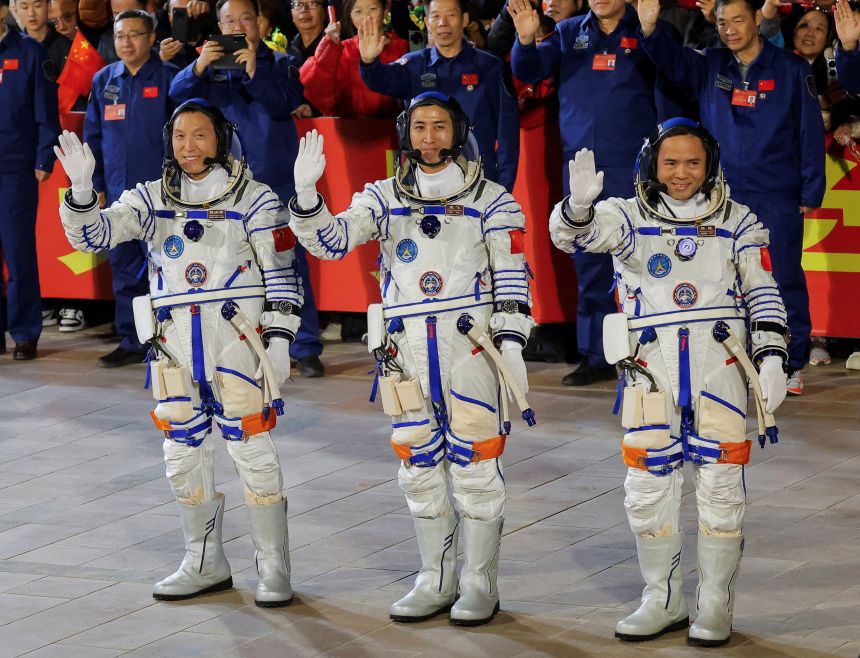
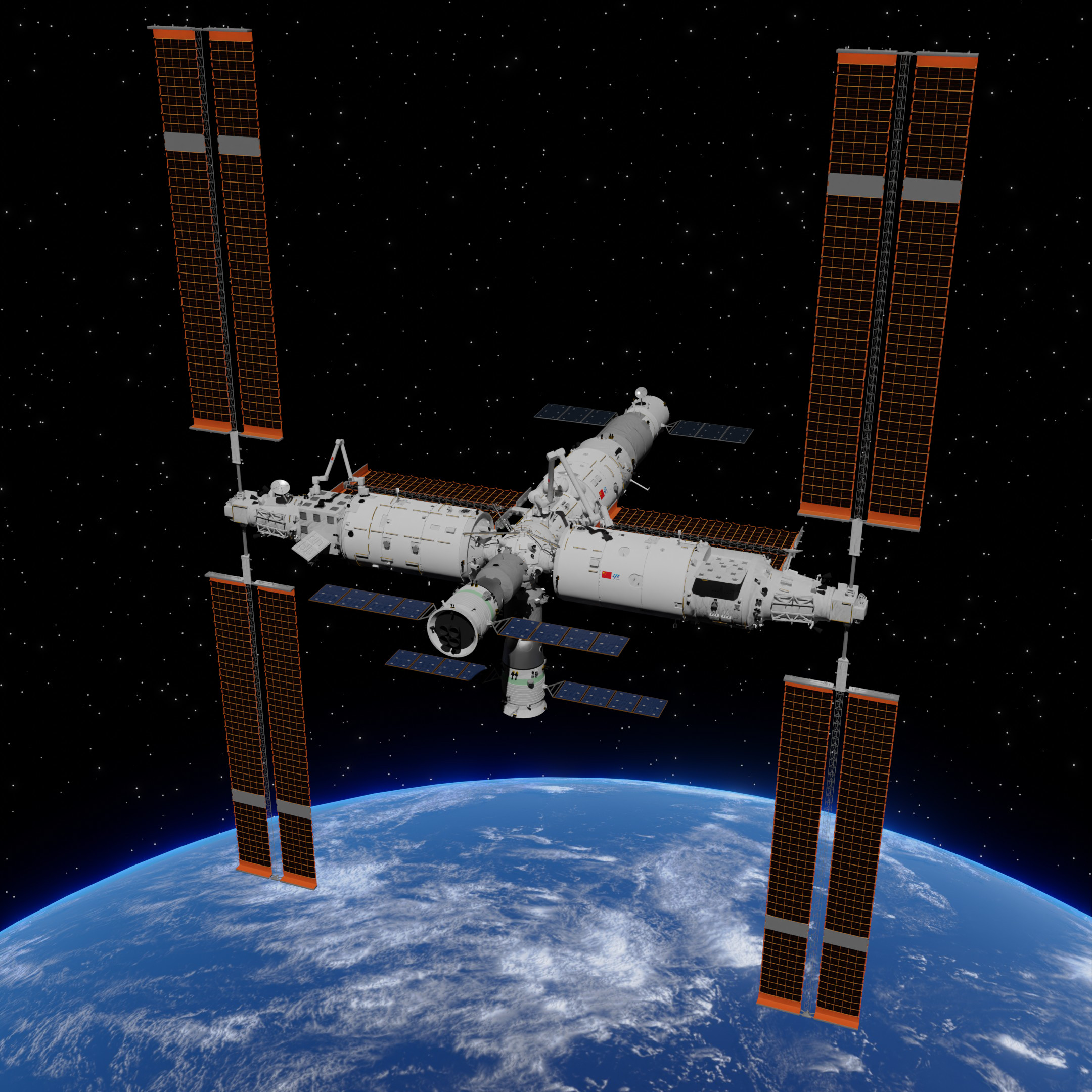
On October 31, 2025, Shenzhou‑21 blasted off from the Jiuquan Satellite Launch Centre aboard a Long March 2F rocket, carrying a crew of three to the Chinese orbiting station Tiangong (space station) — literally “Heavenly Palace” in English. (Reuters)
Among them: 32-year-old Wu Fei — now officially the youngest astronaut China has sent into space. (Reuters)
🚀 Mission Overview
The Shenzhou-21 mission is the latest crew rotation to Tiangong, which was completed in late 2022. (Reuters)
The crew includes:
-
Mission Commander Zhang Lu (48), veteran astronaut who previously flew on Shenzhou-15. (Space)
-
Rookie astronaut Zhang Hongzhang (39), joining for the first time. (Space)
-
Rookie astronaut Wu Fei (32) — engineering background; youngest ever from China’s astronaut corps. (Space)
The launch-to-docking happened in a record-fast 3.5 hours, marking another milestone. (AP News)
The six-month mission will involve scientific experiments, including rodent research (four black mice) to study reproduction in microgravity — a first for China. (Reuters)
🌟 Why It Matters
-
Youth in space: Wu Fei’s age signals a generational shift in China’s astronaut corps — younger, highly trained, ready for more frequent missions.
-
Technological strides: Fast docking, long-duration mission, expansion of station science capabilities all point to growing Chinese ambitions in low Earth orbit.
-
Strategic importance: The Tiangong station is China’s independent orbital outpost, rising in prominence even as it was excluded from the International Space Station programme. (Reuters)
-
Science frontier: Including mammals (mice) in experiments shows an evolution in research scope — moving beyond engineering to life-science in orbit.
🧭 A Glimpse Ahead
-
The crew will rendezvous with cargo vehicles, carry out dozens of experiments, and possibly conduct spacewalks.
-
Their success will feed into China’s broader ambitions, such as lunar missions by 2030. (AP News)
-
The younger crew model suggests China plans more frequent missions and possibly more complex tasks in space.
📝 Final Thoughts
Watching Wu Fei take his place among the stars is an inspiring moment — not just for China, but for the global community of space-enthusiasts. It reminds us that space exploration is ever-entering a new era: one where youth, agility and science go hand-in-hand with ambition and innovation.
Would you like me to pull together a full photo gallery and timeline of the mission (launch, docking, experiments) for your blog post?
Post a Comment